Short Answer: Kadukkai powder is traditionally used for digestive complaints, but strong evidence for ordinary powder is limited. Early studies of specific extracts suggest possible skin benefits; hair research remains preliminary. Powder, extracts and kadukkai legiyam are different products. Choose carefully, avoid cure claims, and seek advice before regular use.
If you are exploring kadukkai powder benefits, you may be wondering whether one traditional herb can help constipation, oily skin and hair fall. The useful answer depends on the benefit you want and the product you plan to use.
A bag of fruit powder, a concentrated extract capsule and a sweet herbal preparation may all carry the kadukkai name. They do not have the same ingredients or the same research behind them. This guide explains the differences, where the evidence is promising, and what deserves caution before adding kadukkai to your routine.
What is kadukkai powder?
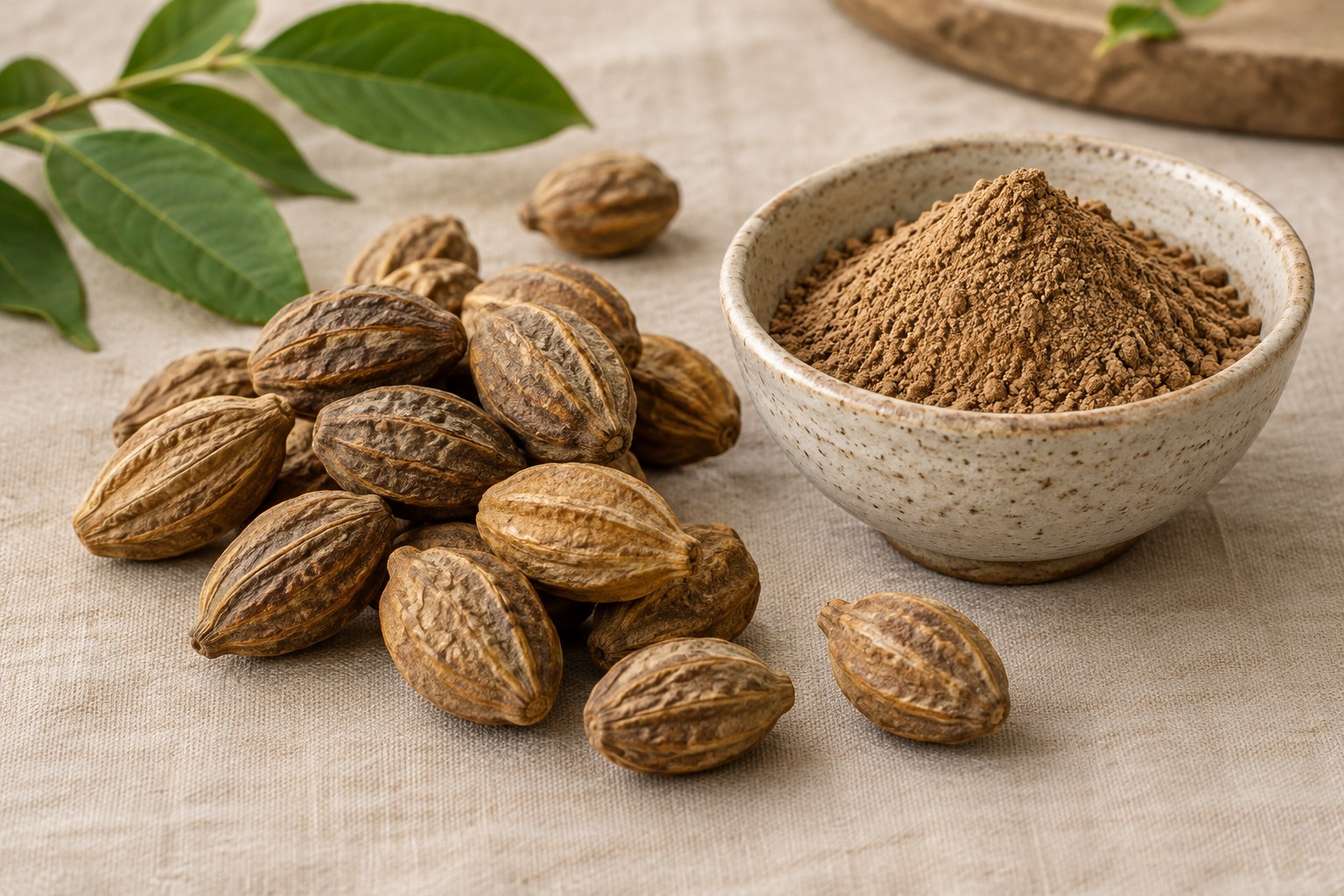
Kadukkai is the Tamil name commonly used for Terminalia chebula. You may also see it called haritaki, harad or chebulic myrobalan. Kadukkai powder is generally made from dried fruit, although the exact processing and composition depend on the product.
The plant has a long history in Siddha and Ayurvedic traditions. That history explains why people use it, but it does not establish that every advertised benefit has been confirmed in clinical studies.
- Fruit powder: ground dried plant material, usually sold in a packet or jar.
- Standardized extract: a processed ingredient with specified constituents; some studies examine this form.
- Legiyam or lehyam: a prepared herbal paste that may contain several ingredients and a sweetening base.
- Triphala: a combination of haritaki, amla and bibhitaki, rather than kadukkai alone.
When reading a label or a study, check which form is being discussed. “Contains haritaki” does not make two products equivalent. Our guide to choosing churna for constipation and gas explains how to compare powder ingredients and instructions.
Kadukkai powder benefits: what is supported?
The clearest way to judge a benefit is to separate traditional use from research in people. A laboratory finding can help researchers decide what to study next; it does not tell us that a household remedy will work.
| Area | Why people use it | Evidence and practical meaning |
|---|---|---|
| Digestion and constipation | Traditional bowel-support use | Research on mixed herbal preparations cannot establish the effect of kadukkai powder alone. Persistent symptoms need assessment. |
| Oily skin and skin appearance | Interest in oil control, redness and wrinkles | A clinical study of a specific oral extract reported improvements in selected measures. Ordinary powder and homemade face packs cannot be assumed to give the same results. |
| Hair growth | Hair fall and scalp-care claims | Recent extract research includes cells, animal models and isolated human tissue. This is not proof of hair regrowth in people using powder. |
| Weight loss, “detox” and disease cures | Broad marketing claims | Do not treat these claims as established benefits or replace medical treatment on their basis. |
Kadukkai for digestion and constipation
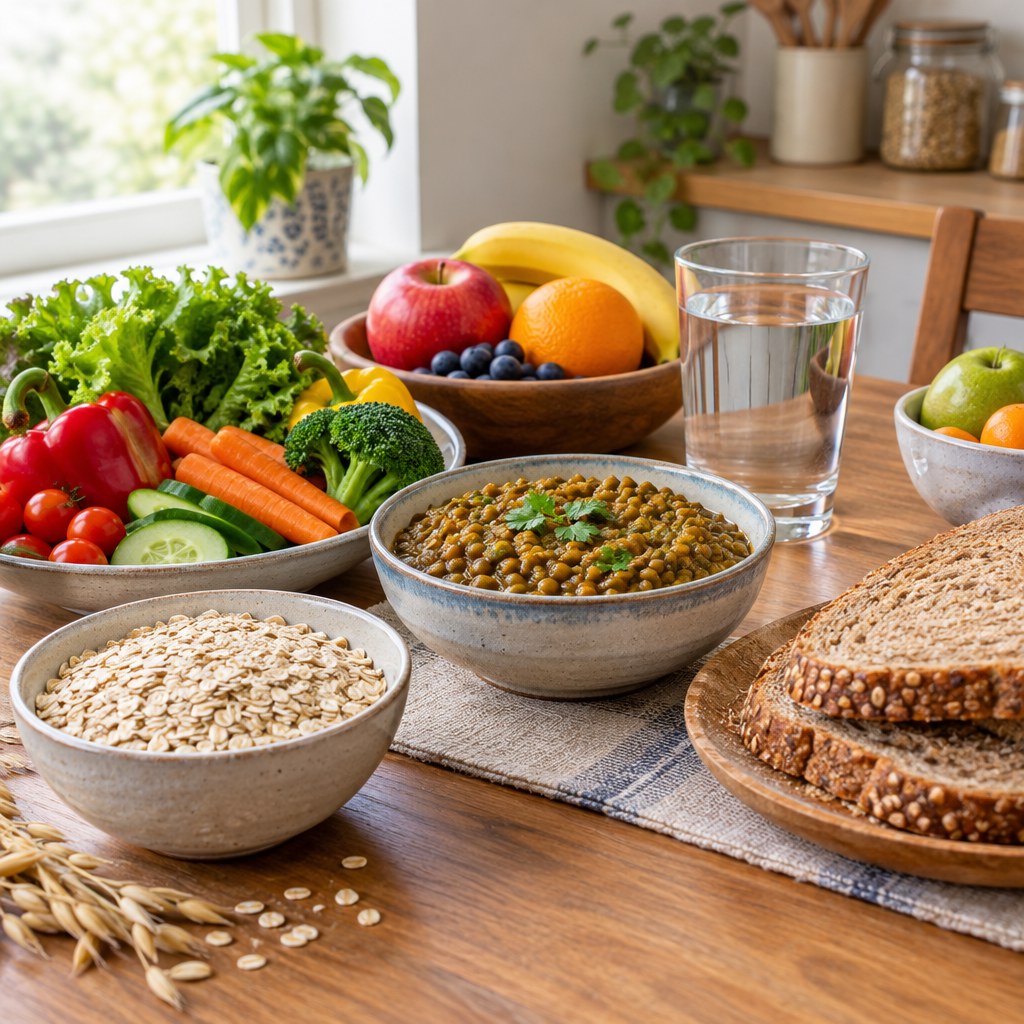
Digestive support is one of the main reasons people consider haritaki powder. However, constipation can have several causes, including diet, changes in routine, some medicines and medical conditions. Choosing a remedy without considering the cause can delay useful care.
A 2023 open-label study assessed a multi-ingredient constipation product containing haritaki along with other herbs, including senna. It had no control group. Because the preparation contained several ingredients, its results cannot tell us whether kadukkai powder alone would provide the same benefit.
Build a bowel-friendly routine first
For uncomplicated constipation, everyday habits are often a useful starting point:
- Increase fibre gradually: include foods such as vegetables, fruit, pulses and whole grains, as tolerated.
- Drink appropriate fluids: fluid helps fibre work; follow individual advice if you have a fluid restriction.
- Keep moving: regular physical activity can support bowel habits.
- Make time for the toilet: allow an unhurried routine and avoid repeatedly ignoring the urge.
If symptoms continue, discuss them with a healthcare professional rather than repeatedly adding herbal laxatives. Tell them about medicines and supplements you take, since these can affect the assessment. For a broader comparison, read our guide to Ayurvedic medicines for constipation.
Does a bowel movement mean kadukkai has “detoxed” the body?
No. Passing stool is a bowel function, not proof that a product has removed unspecified toxins. A useful outcome is comfortable, regular bowel function without troublesome side effects. Diarrhoea or frequent urgency should not be interpreted as evidence that a remedy is working better.
Kadukkai powder benefits for skin

Searches for kadukkai benefits for skin often mix three different ideas: swallowing powder, taking an extract, and applying a face pack. Evidence for one does not automatically support the others.
A 2023 randomized, placebo-controlled study examined a standardized oral Terminalia chebula fruit extract. It reported improvements in selected measures of facial oil production, redness and wrinkle severity. This is an encouraging research finding about that preparation, rather than a recommendation to use ordinary powder for every skin concern.
What about acne, pigmentation and “glowing skin”?
Oiliness, acne and pigmentation are different concerns. Less oil does not by itself demonstrate that a product treats acne, and a change in skin appearance does not establish treatment for dark spots. The cited study should not be used to promise an acne cure, skin whitening or permanent removal of pigmentation.
- For oily skin: choose gentle, non-comedogenic skincare that suits your skin.
- For acne: persistent breakouts or scarring deserve appropriate treatment.
- For uneven pigmentation: identify the cause and protect skin from sun exposure.
- For sensitive skin: avoid experimenting with harsh scrubs or concentrated homemade mixtures.
Can you apply kadukkai powder directly to the face?
There is no established homemade face-pack recipe that can be recommended from the oral extract study. Do not assume that mixing powder with lemon juice or another kitchen ingredient makes it effective or gentle. Avoid applying unfamiliar mixtures around the eyes or to broken or inflamed skin.
A simpler foundation is a gentle cleanser, a suitable moisturizer and broad-spectrum sunscreen with SPF 30 or higher. If you want to try a formulated product containing a botanical ingredient, check its intended use and stop using it if it causes irritation.
Kadukkai benefits for hair: realistic expectations
Claims about hair regrowth, thicker hair and reversing grey hair can sound attractive, especially when hair fall is worrying. The evidence needs careful interpretation.
A 2025 study investigated Terminalia chebula fruit extract using laboratory cells, animal models and human hair follicles and scalp tissue outside the body. These findings may guide further research. They are not a clinical trial showing that drinking kadukkai powder or applying a powder paste restores hair in people.
Ordinary powder has not been established as a treatment for baldness, premature greying or dandruff. A scalp problem may also require a different approach from a hair-growth problem.
What to do when hair fall persists
- Look at the pattern: sudden shedding, patchy loss and gradually thinning hair may have different causes.
- Review your routine: reduce hairstyles that pull tightly on the hair and handle hair gently.
- Avoid guessing at deficiencies: a clinician can decide whether testing is useful.
- Seek assessment: patchy loss, scalp inflammation or continuing shedding deserves professional advice.
Taking a supplement should not postpone identifying the cause. Keeping a record of when shedding started and any recent illness, medication change or scalp symptoms can make the consultation more useful.
Kadukkai legiyam benefits and how it differs from powder
Kadukkai legiyam is a prepared herbal paste used in traditional practice. Its effects and precautions depend on the complete recipe. Some formulations contain other herbs, sugar and ghee, so the kadukkai ingredient alone does not explain everything the product may do.
For example, a legiyam containing another laxative ingredient needs to be assessed as a combination product. A person monitoring blood glucose also needs to check the sweetening ingredients, rather than assuming an herbal preparation is sugar-free.
Powder vs legiyam vs Triphala vs extract
| Product | What it usually means | What to check |
|---|---|---|
| Kadukkai powder | Ground dried fruit | Plant identity, whether it is a single ingredient, quality information and instructions |
| Kadukkai legiyam | Prepared herbal paste; recipe varies | Other herbs, added sugar, allergens and formulation-specific precautions |
| Triphala | Haritaki combined with amla and bibhitaki | All three ingredients and product-specific advice; it is not interchangeable with kadukkai alone |
| Standardized extract | Processed ingredient with specified constituents | Extract details and whether research actually studied the same preparation |
The best choice is not automatically the strongest or most expensive product. It is the one whose ingredients, purpose and safety information fit the situation after appropriate advice.
How to use kadukkai powder responsibly
There is no single evidence-based powder dose suitable for everyone and every purpose. Concentrated extract quantities cannot be converted into teaspoons of ordinary powder. Household spoon sizes and powder density also vary.
Before starting, work through these questions:
- What am I trying to address? Name the actual symptom rather than a broad goal such as “detox.”
- What exactly is in the product? Read the entire ingredient list.
- Is this appropriate for my health? Consider pregnancy, medicines and existing conditions.
- What instructions apply to this formulation? Follow product-specific professional advice.
- How will I judge whether to stop? Persistent symptoms or adverse effects need a reassessment.
A bedtime routine or empty-stomach instruction shared online is not a universal rule. Avoid combining several digestive or herbal products without checking their ingredients; different brand names can hide overlapping components.
Side effects and who should seek advice first
“Natural” does not guarantee that a product is suitable for you. The risks depend on the formulation, quality, amount used and individual health. Digestive discomfort, loose stools or cramping should prompt you to stop and reassess, rather than increase the amount.
- Pregnancy or breastfeeding: safety information is limited; avoid self-prescribing.
- Children: do not copy an adult routine or dose.
- Regular medicines: show the full label to your doctor or pharmacist so they can assess the specific combination.
- Diabetes or another ongoing condition: discuss the product, especially a sweetened or multi-ingredient preparation.
- Existing diarrhoea or unexplained digestive symptoms: adding a bowel remedy may be inappropriate.
Quality matters as well. NCCIH notes that some Ayurvedic products may contain harmful metals. This does not mean every kadukkai product is contaminated, but it is a reason to choose a traceable manufacturer and look for relevant quality testing.
When to get medical help
Seek prompt medical assessment for constipation with blood in the stool, continuing abdominal pain or vomiting. Persistent or worsening symptoms also deserve a review. Do not keep switching herbal remedies when the underlying problem has not been identified.
How to choose and store a kadukkai product
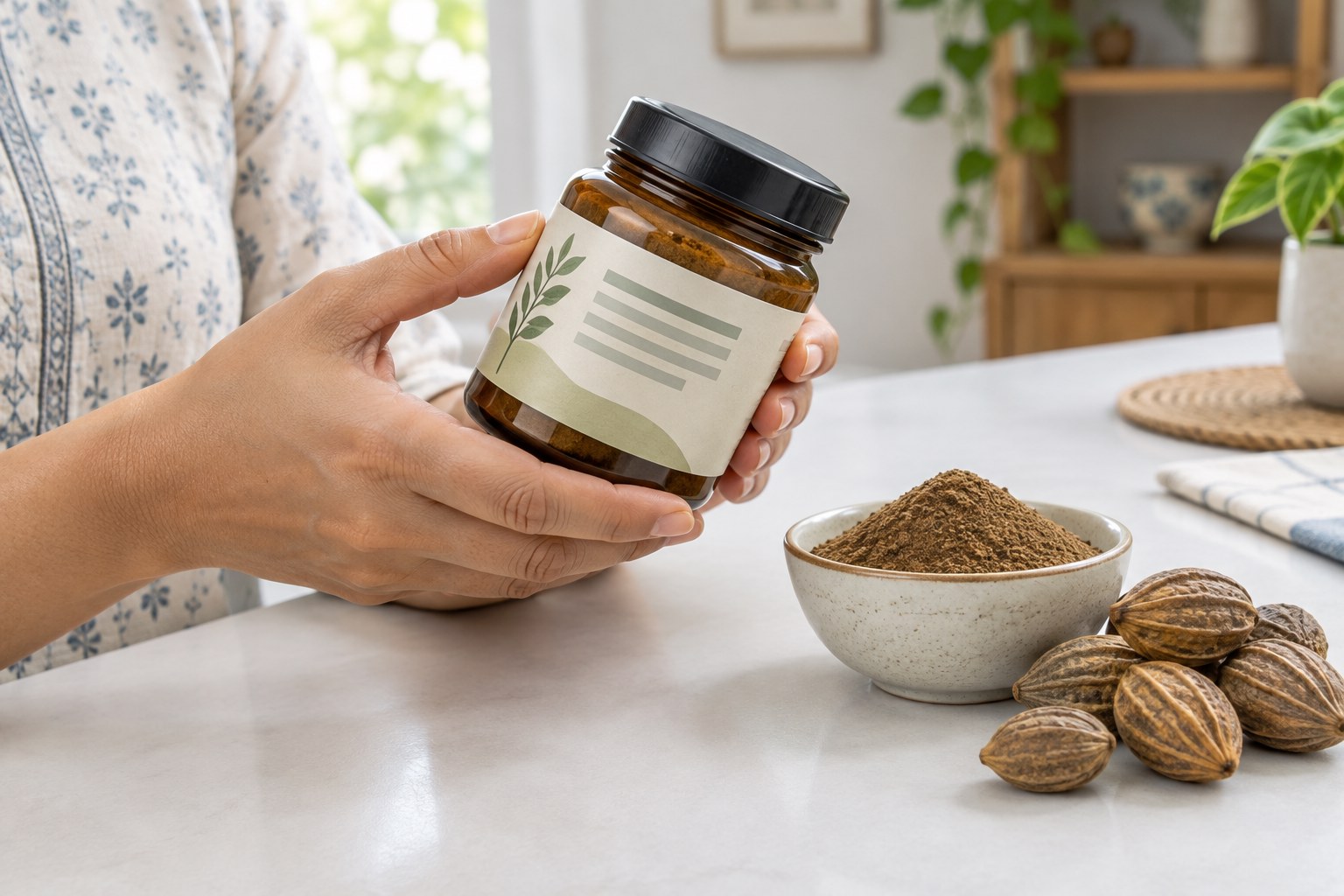
A clear label is more useful than a long list of promised benefits. Before buying, check:
- Identity: the botanical name and the plant part used.
- Ingredients: whether the product is pure powder, a blend or a sweetened preparation.
- Traceability: manufacturer details, batch number and expiry information.
- Quality checks: relevant testing information, ideally tied to the actual batch rather than a general marketing statement.
- Claims: be cautious about promises to cure many unrelated diseases.
Follow the storage instructions on the pack. Keep the original label so you can refer to the ingredients and batch details later. A seal or traditional name alone does not tell you whether the product matches a research preparation.
Common kadukkai myths compared with the facts
| Common claim | A more useful way to think about it |
|---|---|
| “An extract study proves my powder works.” | Check the preparation, route of use and outcome studied before applying the result. |
| “More powder means faster results.” | More is not established as better and may increase unwanted effects. |
| “Herbal means safe for everyone.” | Age, pregnancy, medicines, health conditions and quality all matter. |
| “One herb treats every hair or skin problem.” | Different causes need different assessments and treatments. |
| “Loose stools show a successful detox.” | Loose stools can be an unwanted effect, not a health goal. |
Frequently asked questions
Can kadukkai powder be taken every day?
Daily use is not automatically suitable. The product, reason for use, medicines and health conditions matter. Discuss ongoing use with a qualified clinician, especially if you need it repeatedly for constipation.
Should kadukkai powder be taken at night or on an empty stomach?
There is no established best time for everyone. Follow the specific product instructions and professional advice rather than copying a bedtime or empty-stomach routine from social media.
Does kadukkai powder cure acne or dark spots?
It has not been established as a cure for acne or pigmentation. Research on standardized extracts cannot be assumed to apply to a homemade powder paste.
Can kadukkai reverse grey hair or regrow lost hair?
Reliable clinical evidence has not established these benefits for ordinary kadukkai powder. Hair loss needs assessment because its causes and treatments differ.
Is kadukkai the same as Triphala?
No. Kadukkai, also called haritaki, is one ingredient in Triphala. Triphala combines haritaki, amla and bibhitaki, so the products are not interchangeable.
Is kadukkai legiyam suitable for someone with diabetes?
Some legiyam products contain added sugar. Check the complete label and discuss the formulation with the clinician managing your diabetes before using it.
How much kadukkai powder should I take?
There is no single evidence-based powder dose suitable for every person and purpose. Do not convert a research extract dose into teaspoons of powder. Use product-specific professional advice.
Can children or pregnant women use kadukkai powder?
Safety information is limited for these groups. Avoid self-prescribing it during pregnancy, breastfeeding or for a child; ask an appropriate healthcare professional first.
A practical way to decide
Kadukkai has an established place in traditional practice, while modern research is still defining which preparations may help which outcomes. For everyday decisions, identify the symptom, check the actual product and keep expectations specific. Skin and hair claims need particular care because extract research is often presented as if it proves the benefits of plain powder.
If your concern persists, getting the cause assessed is more useful than building a complicated supplement routine. Use this guide to ask better questions about a product and to recognize when professional care is needed.
Evidence notes
Sources are named below without external links. Traditional use, preliminary research and clinical evidence are distinguished throughout this article.
- Chakkalakal and colleagues. Standardized Terminalia chebula oral extract trial. Journal of Clinical Medicine, 2023;12(4):1591. DOI: 10.3390/jcm12041591.
- Terminalia chebula fruit extract and murine hair growth research. Biomedicines, 2025;13(11):2584. DOI: 10.3390/biomedicines13112584.
- Open-label study of the multi-ingredient product Anuloma DS. Indian Journal of Clinical Practice, July 2023.
- NIDDK guidance on constipation; American Academy of Dermatology guidance on skin care and hair loss; NCCIH guidance on Ayurvedic medicine safety.
Research checked: October 2026. This article provides general health information and does not replace individualized diagnosis or treatment.